Showing posts with label Connecticut. Show all posts

Tuesday, December 6, 2022

52 Ancestors in 52 Weeks.  Week #49 theme is "New Horizons".


As our families arrived on the Atlantic Coast, some as early as the 1640s, they must have been anxiously waiting for the view of the new land on the horizon. They were so brave and ready for new experiences. 

Choosing just one of these many early families, I would like to chronicle our Frost family through more than two centuries of seeking "New Horizons."  The immigrant John Frost, our 9th great grandfather, was born 1614 in England. He came first to New York with his father, John, and then to New Haven CT by 1660s.  His son, John, married Mercy Paine there, and was the father of our 7th gt grandfather, Samuel Frost.  (We will find the surname of Paine again in this family line.)  But first, three generations of "Grandpa Samuels" lived in and around New Haven. They would have lived through the struggles of clearing lands and surviving the elements of a new world, including the French and Indian Wars.   Then in 1754, our 4th gt grandfather, Isaac Frost, was born.  His father fought in the Revolutionary War, and they saw the new nation on the horizon.

Soon after the war, a Connecticut investment company made plans to populate the Western Reserve which would include the new city of Cleveland, Ohio.  Isaac and his family would be among the first to make this venture.  In fact, we believe that one of Isaac's sons, Elias, surveyed the plats for the city of Cleveland. Another son, Johnson LymanFrost, our 3rd Gt Grandfather, married Oriana Paine, daughter of Seth Paine (see, I told you that name would show up again). Oriana Paine Frost was the first teacher in the Brecksville, OH area, and her name shows up in streets and institutions. Oriana’s mother, Hannah Nash Paine, descended from a most interesting line including Canada Waite, born in captivity in Canada when her mother was kidnapped by Indians.

Old Isaac, and sons, Elias, and Lyman helped establish the town of Olmstead, OH.  The Frost name is still seen in the area. But even further horizons beckoned, and in 1820, Johnson Lyman and family are found in St. Clair, Michigan. Both Elias and Lyman had studied medicine, and although Lyman was not a doctor, he used his knowledge to assist a doctor there. Then in 1830, he and his family, including our 2 Gt Grandfather; Elias Carlos Frost, have moved further into the frontier to Lacon County Illinois, near Peoria.  As a side note here, while in Lacon County, the Frosts lived about a mile from the Graves family who went west as part of the Donner party.  New horizons were difficult if not impossible to conquer for many in that era.

When the wilds of Iowa opened for settlement, Lyman, whose wife had died in Illinois, took his children, and traveled to Iowa City.  As we look back, it had been 200 years since the first Frost immigrants had arrived in North America, and they had lived in 6 states, always moving westward.  Iowa in the 1840s was a new frontier, with forts and Indian confrontations. Many settlers came with very little furniture and belongings, as they had to travel by wagons pulled by oxen. But Iowa City grew up quickly into an area of businesses, a militia, and academics. The University and debating societies were established by 1847.

It was in Iowa City that our Frosts, Herringtons, Shafers, and McGills came together through marriage. In the 70s, Elias and family, including daughter, Eva, who married Daniel McGill, moved on to the western part of the state. Our grandma, Harriett “Hattie” McGill, and her siblings were born in Audubon County.  According to family lore, farming was difficult due to the weather and the plague of locusts or grasshoppers.  And at one point, the general store in Audubon County, owned by Elias (also called Carlos) was robbed by the "Crooked Creek Gang".

The brother-in-law of Elias (D.P. McGill's foster father), Daniel Shafer, had helped to survey the state line of Nebraska; so Elias and Lucinda, along with the elderly Lyman, moved on to Stuart, Nebraska.  Lyman died there according to the family Bible. His life alone had stretched from Connecticut to Nebraska, and his very interesting personality has been recorded... another story.

After a few years near Keya Paha County, Elias and family moved on west again, to Chadron, Dawes County, Nebraska, around 1888.  The McGills, still in Iowa, headed for the newly opened territory of Oklahoma, with Daniel making the Run of 1889. And Elias also moved his family to Oklahoma, where they lived and died in Perry, Noble County. 

Many descendants and relatives of these Frost families followed their dreams even further west in the U.S.   Their stories include California during the gold rush days and later years, as well as other states. We have so many families who made similar treks, but this is an example of the pioneer spirit…seeking New Horizons.

Wednesday, September 7, 2022

52 Ancestors in 52 Weeks.  Week #36 theme is Exploration.

There are many ways to explore in genealogy searching: Online records, libraries, other people’s trees, newspapers, or in person. We have prepared by doing all of the above, and then headed out, off the beaten path, to visit the locations where our ancestors lived. So far, we have visited more than 25 locations in Oklahoma, Kansas, Texas, Arkansas, Tennessee, Kentucky, Mississippi, Alabama, Georgia, North Carolina, Virginia, West Virginia, Rhode Island, Connecticut, and New York. We took many, many photographs along the way and my husband has even painted watercolors of some locations. 

There are so many photographs, that I need to choose just one family line for this post. You will see where we explored our Griffin line, starting with John Griffin, immigrant from Wales, who arrived in Connecticut about 1640. We visited Granby and Simsbury, where roads, farms and even shopping centers bear the Griffin name. The photo below is a current day sheep farm on the original land called Griffin’s Farmstead. Of course the structure was not there in 1640.  John's son, Thomas, was born on that property, in 1658. 


Thomas Griffin was the father of Benoni Griffin,Sr.,  born 1714. His mill was located at The Falls, on the Farmington River, in Simsbury, CT. It was formerly owned by his grandfather, John Griffin. We found the Farmington River, but couldn't see The Falls. 


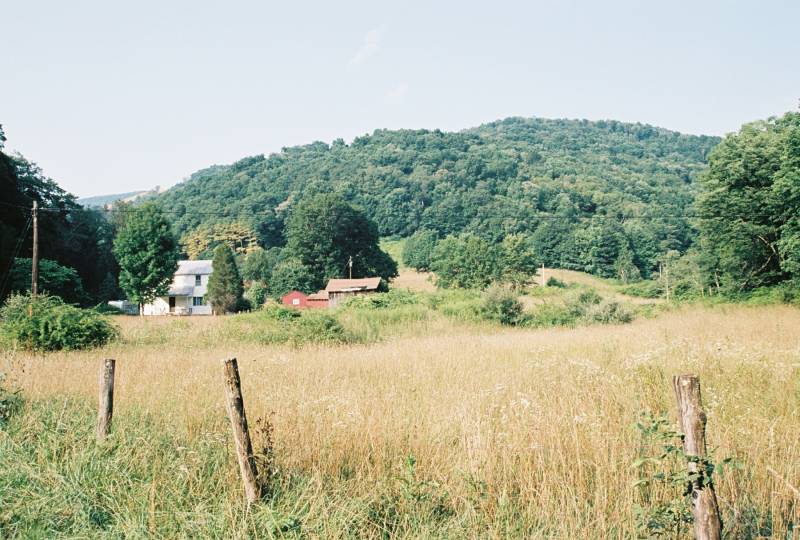
Although other siblings stayed in Connecticut, Benoni Griffin, jr. acquired a grant in Virginia, about 1784.  He settled in the area of Bath County, which is now Arbovale, West Virginia. The photo is of the view he would have seen of the Greenbrier River valley. 


His son Jonathan married Rachel Sharp and lived on Stony Creek, which is near the present city of Marlinton, West Virginia. We explored the area, still known as the Griffin land. Photo is of the working  farm there. 


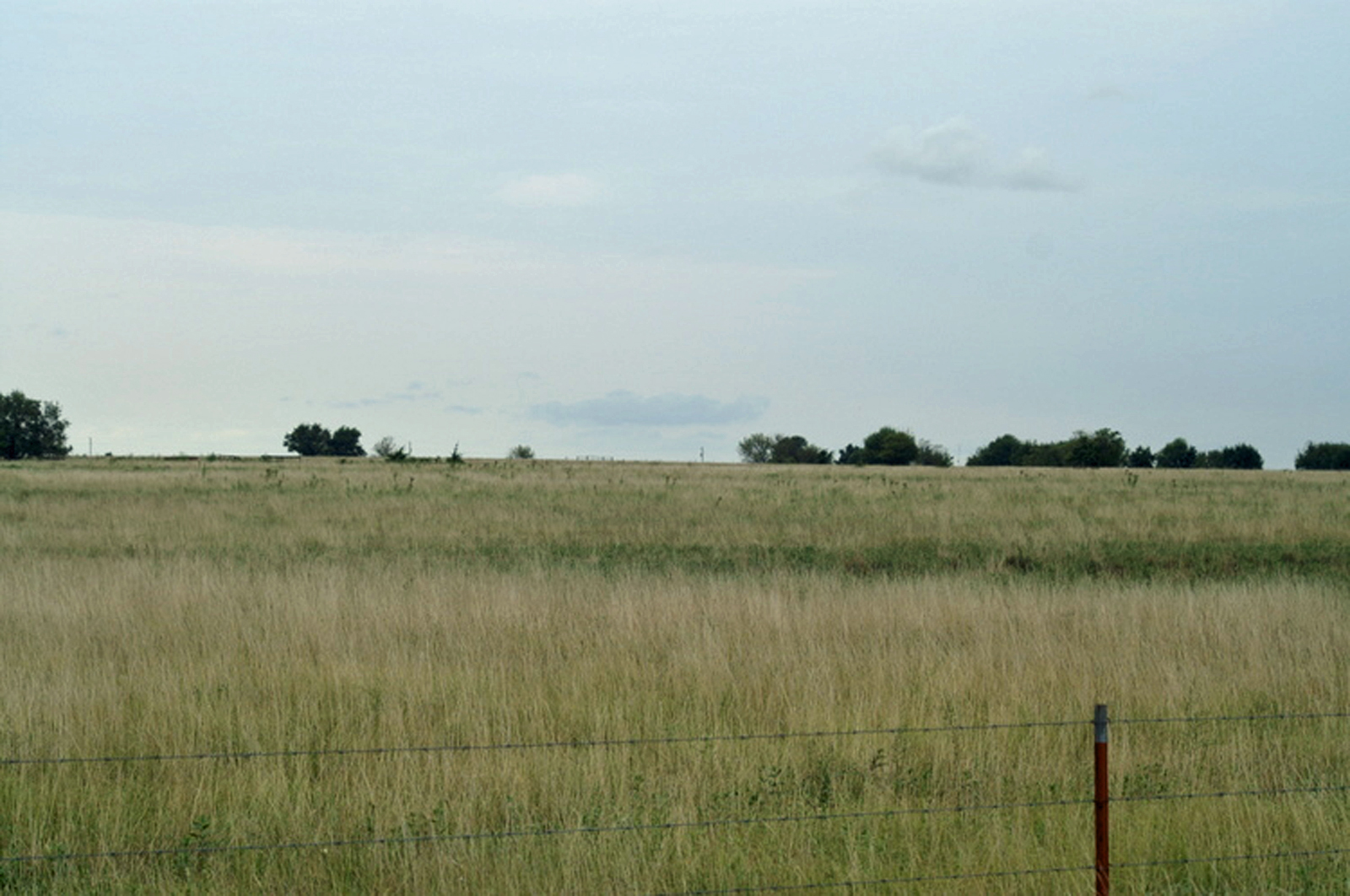
After the Civil War, Jonathan’s son William and family migrated (by way of stops in Iowa and Missouri) to live in Montgomery County Kansas. Their homestead in current photo is still called Griffin Hill, and down the hill is the land belonging to William’s son, Samuel, my Gt.Grandfather.  This is where my Grandfather Charley Griffin was born, and probably road his horse up that trail to his Grandfather's home. 

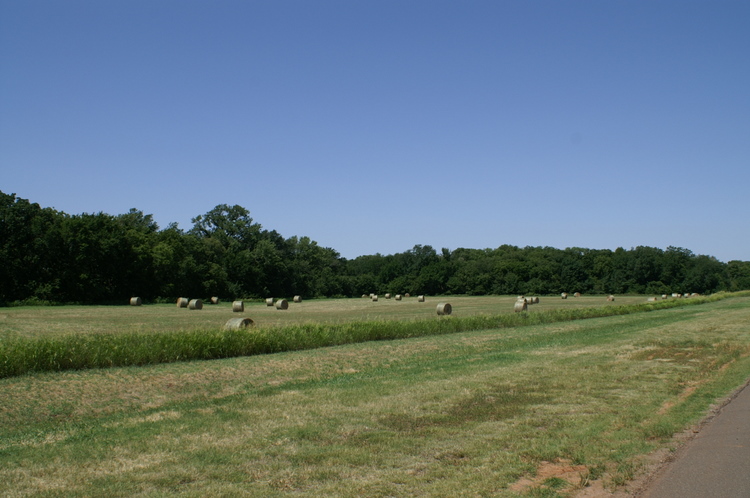
In 1889, when land was opened in Oklahoma Territory, a claim was staked in William’s name, by his youngest son, Pete Griffin.  A few years later, Samuel’s widow, Lizzie, brought her family to that same property, west of Edmond, and homesteaded. Charley and his siblings helped to farm the land, near Waterloo Road and Portland.  Photo is of hay bales, as the land is still agricultural, although near one of the fastest growing cities in Oklahoma. 


Charley married Hattie McGill (of another 89er family) and for a time they farmed near Ahpeatone, in Cotton County OK.  My father, Dan Griffin, shared his boyhood memories of living in Cotton County, and fun with his brothers. We believe this is the house they lived in.


 The last photo is the house where Charley and family lived in Edmond, Oklahoma, where our own family memories include porch swings, marking our heights on the door frame, fun with cousins, celebrating Christmas and Fourth of July, and more. 


Friday, July 15, 2022

 John Griffin Narrative.... not documented although several books have this info

Born in Wales,   Sergeant John Griffin, a Naval officer, went first to England, where he changed his name from Griffith to Griffin, the English version.   He immigrated to America in 1635 along with his older brother, Edward.

John sailed from England, August 24 aboard the ship, CONSTANCE, en route to Virginia. 

Link to Ship's Passenger List.

http://www.olivetreegenealogy.com/ships/tova_constance1635.shtml

He was in the employ of Capt. Claiborne, the Secretary of the Virginia Colonies.   He owned three square miles of land (l, 920 acres) in Virginia.

He worked with the Indians of Virginia.   He could speak English and Welsh, and record has it that he was able to converse with the Indians also.

In June, 1638 when Lord Baltimore of Maryland ordered an attack on the Virginia Islands of Kent and Palmer, John and Edward were on a ship that was captured.   They escaped by ship and left Virginia.   John went to Connecticut and his brother, Edward, went to the Dutch Colony of Amsterdam (New York).

John’s name appears in New Haven CT records in 1642 when he was enrolled in the militia.   In 1643 he was fined a few pence for not having his arms in shape. He took the oath of fidelity at New Haven on July 1, 1644.

He removed to Windsor, marrying there, in 1647, Anna Bancroft of Windsor, and appearing in the Windsor records in August, 1659.   John and Anna (Bancroft) were among the first settlers from Windsor to move to Simsbury where he was a Representative for some years.

Simsbury, CT (Indian name, Massacoe) was settled about 1647.  The first Indian deed was given to John Griffin, 1648, recorded in the town of Windsor.

The shipping industry had a great need for tar and pitch for the ships.   John having been on ships realized this, and having located a great source of pine trees began to manufacture tar and pitch.   He had joined with Michael Humphrey in the manufacture of tar and turpentine in the pine forest of Massaco and Salmon Brook.   The tar, used by the British Navy, promised fortunes for both of them.

About 1646, the tar kilns of John Griffin were set afire by Indians.   Somehow John found out that the name of the Indian responsible was Manahannoose, a local Algonquin who was tired of English encroachment.   Manahannoose was captured, and according to a new law was ordered to be a servant of Mr. Griffin,   or shipped off in return for enslaved Africans, or to pay 100 Pounds.

To prevent this from happening, his village deeded the area of Windsor known as Massaco to John Griffin.   Although technically illegal for John to accept this deed, he probably looked at it as a promising business venture and took advantage of it.   Thirteen years later, (probably after removing the tar and pitch) John turned his deed over to the colony.

In 1663 a grant of 200 acres was made to John Griffin in consideration for taking the land from the Indians and “that he was the first that perfected the art of making pitch and tar in those parts --The land was to be taken up where he can find it between Massaco and Waranoake, whereof there may be forty acres of meadow, if it be there to be had, and be not prejudicial to a plantation, and not granted."

This was later known as "Griffin's Lordship or Griffin’s Hardship" and today there are roads and areas with the name of Griffin. 

John Griffin is considered to be the first settler of Simsbury and Granby.   He represented Simsbury in the General Assembly from 1670-74.   He was a prominent and successful businessman and pioneer, but that was not all. He also had a lighter side.   In 1655 he was fined 20 pounds on a complaint of "riotous conduct of John Griffin, John Bancroft and Jacob Drake."

His estate inventory of August 23, 1681 included about three square miles of land, or about 1,920 acres.  We don’t have a copy of his will, but one of his daughters, Abigail Griffin Segar, received one cow.

Abigail Griffin Segar and husband Richard died within weeks of each other leaving 3 children.

Their household inventory included:  tallow, bees wax for candles, earthen dishes, bowls, a pewter cup and 2 pewter spoons, 2 glass bottles, a meal sieve, an old iron pot, iron kettle, and a frying pan.  Furniture: 1 bed, chest, box, 1 blanket & a “civerland” (coverlet).  No chairs or table. No plow, axe, hoe, or saw.  One cow had been Abigail’s inheritance from John, Lord Griffin’s estate.  They had looms and wove to barter and rent of tools (not many households had looms or spun cloth).  They had land and house of 26 acres total and 10 acres marsh.

There was not much schooling as all children had to work.  The Segar children had to sell their land.  Another son in law, Wilcoxson, had more tools and books, guns (Mindwell Griffin was his wife), spinning wheel, furniture and 150 acres of good land. But he died at age 47.  

 (Some of this information was copied for Ella Griffin Spooner who was seeking information to enable her   to join DAR)   Facts also taken from FAMILY TREE MAKER, ancestors of Lydia Carrington Payne and Ancestors of Mary Frances.   More information came from Kathy Griffin Hughes.


Thursday, June 30, 2022


52 Ancestors in 52 Weeks - Week # 26 Theme - Identity

The word Identity would normally make me think of an individual discovery, but my entry is for a whole family line. When I was growing up, my father, Dan Griffin, in Oklahoma, would say "Our Griffin family is NOT the Virginia Griffins."  It stuck in my mind and when I began genealogy searching, I kept it as a clue.  My knowledge of his Griffin family stopped with my Gt Grandfather, Samuel Young Griffin, who was a Union Veteran and died in Kansas, where he had homesteaded.  As we traced his heritage, and the "Identity" of this family, we found his father and grandfather in an area of Virginia that would become West Virginia.  But Daddy said we were NOT the Virginia Griffins.  Further research showed that our Griffin ancestors came from Connecticut before claiming land in Bath/ Pocahontas County in West Virginia.  Before Connecticut, our immigrant Griffin came from Wales in the 1600s.  I believe that family tradition had passed along the "Not Virginia Griffins" because Virginians would have been Southern sympathizers.  The area of our family was in a Union area. Some families even being split by their loyalties.  My father and grandfather knew of the Union Veteran, Samuel Griffin, and wanted to carry on that conviction.  I am proud of that identity and those who carried it.  The Griffin name is still being passed along in given names of many descendants.

Saturday, May 23, 2009

Isaac Frost, 4gt Grandfather, b. 1759 CT

The first record I find of Isaac Frost is in the 1800 census of New Haven, CT. Family members are not named, but the ages of his sons correspond to our ancestor Johnson Lyman Frost, b. 1794, and brother, Elias Carrington Frost, b. 1780-90. There are females listed in Isaac’s family, who would be wife, Ann, and daughters, names unknown. Among other families in the Waterbury Township, CT, are the Hoadleys and Bronsons. Both of these families are related to our Frost ancestors, which leads us to believe this is the Isaac Frost who migrated to Columbia Station, near Cleveland, Ohio, along with Hoadleys and Bronsons.

As a background, I would like to share something about the history of the Western Reserve area, which includes Cleveland, Ohio. This information about Columbia Township will explain the migration of our family, and is found online at
Wikipedia:

“Columbia Station is part of the Connecticut Western Reserve, lands ceded in 1786 by Connecticut after the American Revolution. In 1805, two years after Ohio became a U.S. State, the federal government finalized treaties with local American Indians. The reserve was surveyed and parceled into rough 5-mile-square blocks (smaller than the typical 6-mile-square townships in the U.S.). The Bronson and Hoadley families of Waterbury, Connecticut, pooled together $20,087 to purchase a township. On April 4, 1807, they drew Township 5 N, Range 15 W from a random selection of townships in the reserve, purchasing the land ‘site’-unseen.
Columbia Station has been continuously inhabited since 1807, the longest settlement in the Western Reserve west of the Cuyahoga River. Columbia has other firsts in the Western Reserve west of the Cuyahoga: the first classroom (Bronson cabin, summer of 1808), first teacher (Sally Bronson, 1808… probably sister of our Isaac Frost), first white child born (Sally Hoadley…distant cousin of Frosts), first gristmill, (1809), first cemetery (1811), first doctor (Zephaniah Potter, 1809), and organized church society (Episcopalian, 1809). Columbia celebrated its bicentennial in 2007.”
Wikipedia
One of Isaac’s sons, Elias C. Frost, of Euclid, Ohio, is mentioned as one of the first surveyors in 1807. These first men came from Waterbury, CT to Buffalo, NY, then spent 21 days on the rough waters of Lake Erie to reach Cleveland. Euclid was the new “hometown” of Elias’ wife, Phoebe McElrath.

“In the summer of 1807 the township was surveyed. A surveyor by the name of LACEY was first employed, but his chain was found to be of an incorrect length and he was discharged. In August of the same year Robert WORDEN, a surveyor from Columbiana county, was engaged, who, with Levi BRONSON, Daniel BRONSON, Benoni ADAMS, and Elias FROST of Euclid, as ax and chain men, set out from Cleveland taking a southwest course until the northeast corner of the town was reached. From this point they proceeded west two and a half miles, thence south a like distance to the center of the township. The party made their encampment here, on the west bank of the Rocky River. A daughter of Levi BRONSON, Mrs. Oliver TERRELL, accompanied the party to do their cooking, to whom must be accorded the honor of being the first white woman that ever set foot on the soil of Columbia.”
History of Lorain County, Columbia Township (Part 1).

Father, Isaac, and sons, Elias C. and Lyman J. Frost, are shown to settle on lot #28 of the Columbia Township in 1808.

We do not know if there were any of Isaac’s daughters who traveled west with the Frost family, but his wife, Anne, made the trip. A narrative about another family, the Hickox’s, who traveled from Waterbury CT at the same time, gives us an idea of those early beginnings:

“Mrs. HICKOX ‘kept house’ in their wagon while her husband and sons felled trees and built their log cabin, which, though small, was large enough for its furnishings, the most important being the children, four sons and as many daughters. " Cuyahoga Cities

There are many more accounts of the earliest settlement of the townships in Lorain and Cuyahoga County at
http://www.columbiahistoricalsociety.org/history1.html
In reading these narratives which have been posted, we find many mentions of the Frost family.