Showing posts with label Pocahontas County. Show all posts

Thursday, June 30, 2022


52 Ancestors in 52 Weeks - Week # 26 Theme - Identity

The word Identity would normally make me think of an individual discovery, but my entry is for a whole family line. When I was growing up, my father, Dan Griffin, in Oklahoma, would say "Our Griffin family is NOT the Virginia Griffins."  It stuck in my mind and when I began genealogy searching, I kept it as a clue.  My knowledge of his Griffin family stopped with my Gt Grandfather, Samuel Young Griffin, who was a Union Veteran and died in Kansas, where he had homesteaded.  As we traced his heritage, and the "Identity" of this family, we found his father and grandfather in an area of Virginia that would become West Virginia.  But Daddy said we were NOT the Virginia Griffins.  Further research showed that our Griffin ancestors came from Connecticut before claiming land in Bath/ Pocahontas County in West Virginia.  Before Connecticut, our immigrant Griffin came from Wales in the 1600s.  I believe that family tradition had passed along the "Not Virginia Griffins" because Virginians would have been Southern sympathizers.  The area of our family was in a Union area. Some families even being split by their loyalties.  My father and grandfather knew of the Union Veteran, Samuel Griffin, and wanted to carry on that conviction.  I am proud of that identity and those who carried it.  The Griffin name is still being passed along in given names of many descendants.

Monday, March 14, 2022

 52 Ancestors in 52 Weeks.  Week # 11 Theme - Flowers


The wildflowers shown here are on land that was once patented by my 4Gt Grandfather, Benoni Griffin  1743 - 1796.  On a visit to West Virginia a few years ago, we found a clue concerning the location of Benoni's land near Arbovale in Pocahontas County. When Benoni settled on this land it was in Bath County, Virginia.  We were at the Bath County Courthouse and found a tiny paragraph written 60-70 years ago.  

"The town of 
Arbovale is situated on the grant of Benona Griffin & James Rucker, Jr. The set stone corner near the gate of C.O. Wood's store building is a common corner to the two grants mentioned and to the land supposed to be owned by Jacob Rambo. The Arbovale Church is in the Griffin Patent. " 

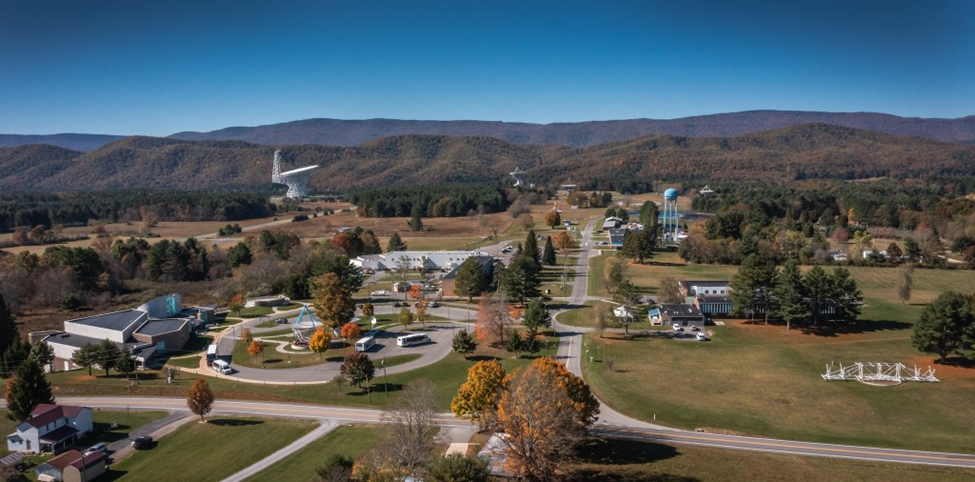
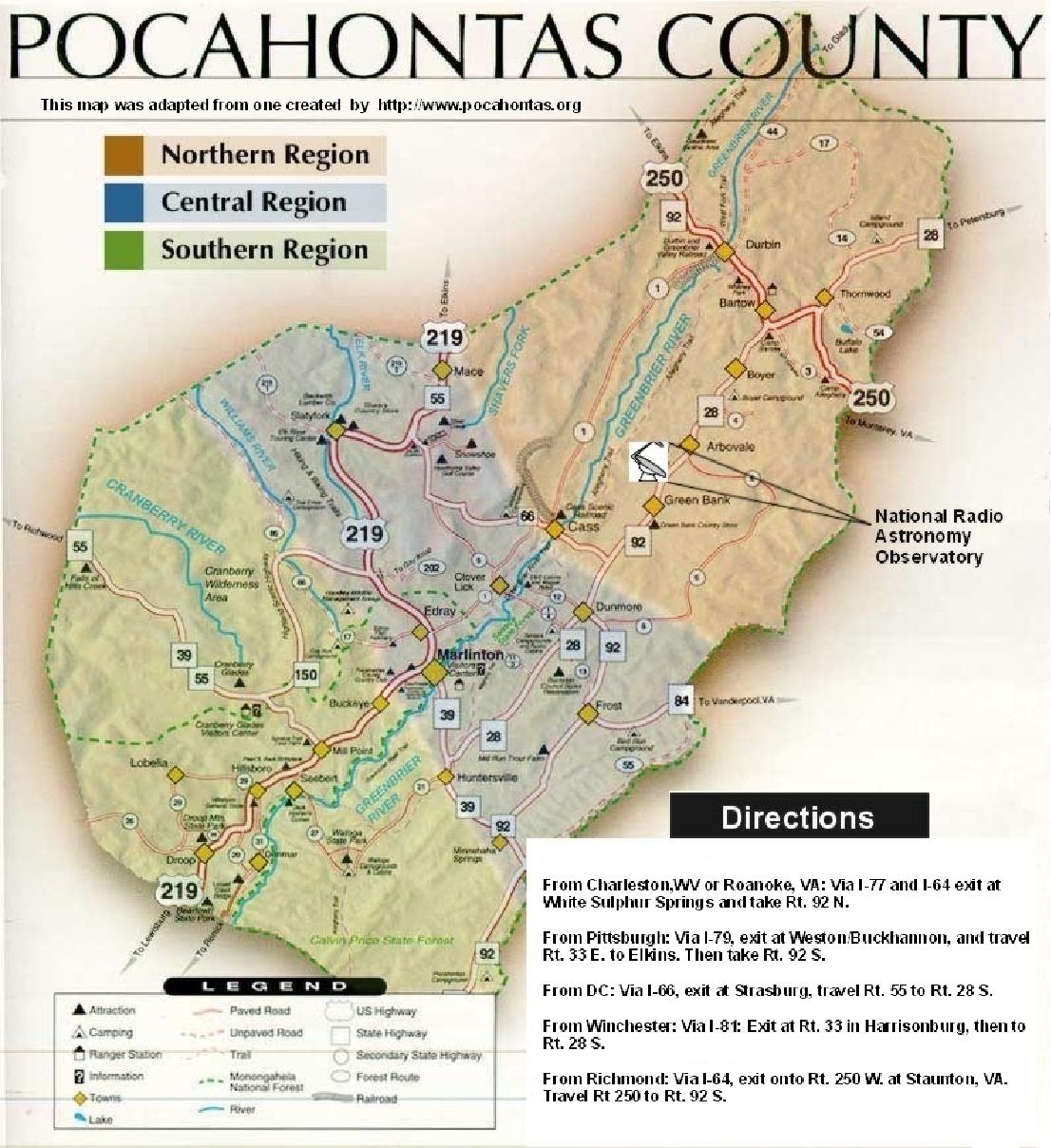
We drove toward Cass and Snowshoe, where skiers love to adventure in winter, but we were there in the summer when wildflowers were blooming.  Finding the Arbovale Church and, looking to the west toward the Greenbrier River, we could see where Benoni's beautiful view would be.  But now all is fenced off and classified, as it is the location of the National Radio Astronomy Observatory .   
http://www.nrao.edu/directions/greenbank/map.jpg

The enormous Greenbank Telescope is located in that complex.  It can be seen for miles around.  


Just imagine what Benoni and his sons, Jonathan, Samuel S., Abraham, Levi, and daughter Mary,  would think if dropped back into Arbovale 200+ years later. Change is inevitable, but the wildflowers keep coming back every summer. 

Tuesday, November 3, 2009

James Rodgers Biography from History of Pocahontas County

Among the worthy industrious persons whose arduous toils and severe privations helped to make our county what it is, deserving of respectful mention was the late James Rodgers, Senior. He was a native of Madison County, born February 13, 1789. His first marriage was with a Miss Jackson of Madison County. The -issue of this marriage was seven children. The sons were Robert, whose wife was a daughter of John Smith, one of the pioneers of Stoney Creek, Joseph, and Drury. The daughters were Sarah, Elizabeth, Mary, and Tabitha. Respecting these children we have virtually no particulars in hand. James Rodgers came to Pocahontas County in 1824 and settled in the woods on Lewis Ridge, at a spot overlooking the Buckeye Cove. (A short distance north of Greenbank. Remember that Greenbank is where Samuel Given got started in the mercantile business before coming to Upper Glade.) Thus he and his family became identified with the county almost from its organization.

His second marriage was with Nellie Lewis, of the Little Levels, a granddaughter of Alexander Waddell, whose descendants are so numerously represented by prosperous and influential citizens in our county at this time. By the second marriage there were six children: Margaret, who became Henry Adhinson's first wife. Rebecca, who became Mrs. Fillren. William Rodgers married Polly Fleming, daughter of the late James Fleming of Swago, and settled on part of the Fleming homestead near Buckeye, where his widow and two daughters now reside. He was a Union pensioner for service in the Union Army. Chesley Rodgers married Mrs. Sally Morrison and settled near Jacox. John Rodgers married a Miss Harter. James L. Rodgers, Junior, was married twice. The first wife was Eliza Burgess. There were ten children in the first family: Justice N. R. Rodgers of Buckeye; the late Mrs. Hannah Wade; G. W. Rodgers of Beaver Dam; Davis Rodgers, deceased; John H. Rodgers, also dead; Maggie became Mrs. William Adkisson of Buckeye; Eliza became Mrs. Olie Auldridge and lives at Hillsboro, Mary and Alvin W. near Buckeye.

By the second marriage with Mrs. Mary Kellison there was a son Lewis, who is now dead, and a daughter Laura.

Thus the writer has endeavored to present the available information concerning this worthy old citizen and his family, aided by his grandson, A. W. Rodgers.

In his time James Rodgers had the reputation of being one of the most industrious of working men. He tried to train his sons and daughters to habits of industry and strict economy. Soon as they became old enough for service they went from home and found ready employment as field hands and housekeepers. This venerable man was a zealous and devoted adherent of the Methodist Protestant church. He was one of the first members in the Buckeye society, and probably one of the first in the country. His prayers and experiences talks were in good language, interspersed with allusions to the parables and quotations of the promises. All this indicates that in early, impressible youth he must have been familiar with persons of more than ordinary culture, such as Madison County was distinguished for. In his speech he had the tone and style that characterized the old Virginia gentry, as the writer learned to know in subsequent years from actual acquaintance with east Virginians.

The writer cherishes the memory of this old citizen with feeling of much respect, as the two often toiled in the meadows and harvest fields side by side in his boyhood. He remembers being often impressed by the pathos and fervency of the old man's occasional prayers in the morning worship. This was some thing which was never omitted in the old Marlington home. The belief of the old people was that "prayer and provender hinder no man" and so time was always found for prayer, as well as for breakfast and supper.

Some of his expressions still linger in memory after more than fifty years. One was an allusion to the grapes of Eschol as typical of the richness of the promised land. His idea was that God would give his humble praying people here while on the pilgrimage a cluster now and then from the heavenly vine so as to refresh and encourage them to put forth their earnest, faithful efforts to go up and receive possession of the heavenly land. This allusion was utilized as suggestive of a sermon prepared and preached by the writer thirty years ago. May we meet and see for ourselves the blessed land in all its richness -and glorious beauty, and especially the vine from which the clusters were gathered that cheered and encouraged him.

Saturday, October 31, 2009

Samuel Young Griffin and Elizabeth "Lizzie" Terry

Samuel Young Griffin
b. 23 Sept. 1840 Pocahontas Co, VA
m. 9 Oct. 1873, Sunnyside, Montgomery Co., KS
d. 2 Oct. 1891 Sycamore Twp. Montgomery Co., KS (Obituary says of typhoid fever)

Spouse: Elizabeth "Lizzie" Terry
b. 21 Jan. 1850, Milwaukee, Dane Co., WI
d. 20 Mar. 1939, Edmond, Okla. Co., OK

Samuel Young Griffin is the son of William Griffin and Elizabeth Rodgers. The family lived in Pocahontas County, VA (later West VA) farming in the area of the Greenbrier River near present day Marlinton. His grandfather, Jonathan Griffin, had migrated to VA from Connecticut and married, Rachel Sharp, daughter of pioneer William Sharp.

The following statements are abstracted from Samuel's obituary, not necessarily proven true.
Samuel "...was a drummer boy for Co. F 47th Reg. Ohio Vols. At the close of the war, he moved to Iowa with his father's family. Then moved to Jasper Co., MO. In 1869 moved to Kansas along with the late Col. Samuel Young. Lived north of Larimer, Kansas. On Oct. 9, 1873, he married Elizabeth Terry."

In Samuel Young Griffin's military pension records, registration and muster papers indicate that he enlisted Sept. 18, 1861 at Weston VA (became W. VA) at age 20, 5 days before his 21st birthday. We find no evidence that he was a drummer boy, although he was a provost guard (guarding officers' headquarters). His description was: blue eyes, dark hair, fair complexion, height 5 ft. 9 in.

Throughout his 3 years of service, he was taken ill at different times as were many soldiers of that war. He was hospitalized at Louisville, KY. He contracted measles in Feb. 1862, near Camp Tompkins, WVA, which resulted in chronic bronchitis. He was present in muster rolls during most of 1862. Spent most of 1863 at Louisville Hospital; had duty as provost guard there. During 1864, he was a member of the Veteran Reserve Corps, and was discharged in September at the end of his third year, at Chicago, IL. One major under whom he served was Major McCook, one of 15 of Ohio's "Fighting McCooks", who were involved in major battles at Chickamauga and Kennesaw Mt., GA, among others. A Col. Daniel McCook was killed at Kennesaw Mt., GA, fighting under General Sherman, June 1864. I do not know if Samuel Griffin's company was involved in this battle, although I do believe they were in Georgia, as one muster roll is dated Atlanta, Aug. 1864, which included his name. Follow this link to letters written by Samuel to his parents during the Civil War.

Lizzie Terry, daughter of William and Charlotte Terry, moved with her family from her birthplace in Milwaukee, WI, to Macon County, IL. During the Civil War, her brothers were naturalized and served in the Union Army. Her father died during the 1860s and the family moved to the Southeastern part of Kansas soon afterwards. Lizzie and Sam met in Montgomery County, Kansas, where they were married when Sam was 33 and Lizzie was 23 years of age. Their marriage certificate says the wedding took place "at the home of the bride's mother at Sunnyside."

Sam and Lizzie had seven children, six of whom grew to adulthood. Samuel's veteran pension papers verify the birthdates and places of the children, and who was present at the births.

Harry L. "Jack" Griffin, born Sept. 1874
Charles Walter "Charley" Griffin, a twin, born on March 15, 1877
Mata or Mattie Griffin, a twin, born on March 15, 1877
(Died at 6 months; buried at Crone's Cemetery)
Ira D. Griffin, born on Nov. 26, 1878
Clara M. Griffin, born on Dec. 17, 1881
Elmer E. Griffin, born on April 23, 1885
Floyd F. Griffin, born on Oct. 3, 1889

Samuel died in 1891. The funeral was at Krone's School Methodist Episcopal, where he was a member. He is buried at the Krone's Cemetery, Montgomery County, Kansas. His obituary states:
"Brothers still living at the time of his death: Andrew, Adam, Adonijah, John, William, and Peter. Sister: Mrs. Hugh McNutt."

A few months after Samuel's death, Lizzie and her children moved to Edmond, Oklahoma County, Oklahoma, where her mother-in-law, Elizabeth Rodgers Griffin, and brother-in-law, Peter C. Griffin had settled as 89ers.

We have posted a page which includes obituary and a tribute to Lizzie Terry Griffin, who passed away March 30, 1939 at 89 years. She is buried at Greenlawn Cemetery in Edmond.

William Griffin, son of Jonathan

William Griffin, my great great grandfather, was the third child of Jonathan and Rachael Sharp Griffin. He was born March 27, 1812, in Bath County Virginia (later to become Pocahontas Co. West Virginia). An old family letter states that William was called “Billy”, and also that he was educated in Connecticut. I have seen no evidence of the latter. Although his father was born in CT, we find no information that family members returned to CT from West Virginia for education.

We do know that the family valued education, and William was a school teacher and Sunday School teacher. According to his obituary, he was an active member and later an officer, of the Methodist Episcopal Church from age 22. He may well have met his wife, Elizabeth M. Rodgers, at church, as her father, James Rodgers, was a devout man of the area. Of course, the churches met in homes in those days, or outdoors under the trees.

This quote is from “Moccasin Tracks and other Imprints” by William C. Dodrill, 1915.

“It is not known that any schools were taught in this county [Webster] before 1835. The first school of which I have any knowledge was erected by two brothers, William and Benjamin Hamrick, and James Dodrill, on the Elk [River] nearly opposite the mouth of Wolf Pen Run, six miles above Webster Springs. [My note: At that time this would have been in Nicholas or Braxton County, later Webster.] These three men employed William Griffin to teach three months, for which he was to receive 30 dollars and board. Spelling, reading, writing, and arithmetic were the branches taught. The Bible was the text used in the reading classes. …”

Note: William would have been about 23 at this time. Another source says that William’s brother, Benoni Griffin, taught at the school. Benoni later married William Hamrick’s daughter, Nancy.

Elizabeth Rodgers, daughter of James and Elizabeth Jackson Rodgers, was born Aug. 4, 1818, in what she called “East” Virginia, probably Culpeper or Madison County, VA. Her mother died when Elizabeth was a child. Her father brought seven children over the mountains to the Buckeye area of Pocahontas County, where he married for a second time, and had six more children. They lived on Rodgers Mountain, south of the Stony Creek area where the Griffins lived.

After the time that William was a teacher, we next find a record of William as an adult, recipient of 62 acres (possibly more) of land transferred or sold to him by his father, Jonathan Griffin, Sept 4, 1838, just a few weeks before William and Elizabeth's marriage. The land was originally granted to Benoni Griffin of Connecticut, on the Greenbrier River (now site of the Green Bank Telescope.) Jonathan was somehow related to this Benoni; I hope to discover a father/son relationship.

We have a copy of the marriage certificate for William and Elizabeth, which is found on pg. 25, Pocahontas Co. Marriage Book as follows:

22 Oct 1838 Bond: William Griffin and Elizabeth M. Rogers. Surety, William Griffin and James Rogers.

25 Oct 1838 Return: William GRIFFIN and Elizabeth M. Rogers by Joseph G. McKeehan.

There is no indication that William and Elizabeth ever lived on the Green Bank land. Their first son, Joseph was born in 1839, in Pocahontas, where the rest of the Jonathan Griffin family lived. Then in 1840, William, Elizabeth, and son, under 5, are found in Nicholas County. This county was the home of Elizabeth’s two sisters, Tabitha Rodgers, wife of James McAvoy, and Sarah Ann Rodgers, wife of Adonijah Harris, and brother, Robert Rodgers. Harris and Robert Rodgers were both blacksmiths by trade. In later years, at least three of William’s children/grandchildren list their occupations as blacksmith.

William and his wife Elizabeth farmed in Pocahontas County near the family farm in 1850, as father, Jonathan, was aged. After Jonathan’s death around 1852, most of his sons and families, as well as their mother, Rachael, moved to Braxton (later Webster County west of the mountains near the Elk River. Brother, Abraham, stayed on the family farm on Swago and Stony Creek in Pocahontas County.

William was on the petition for the formation of Webster County West VA, in 1860. It has been stated in a family letter that he farmed 400 acres in Webster County. He was blinded in one eye by a corn stalk when walking through his field.

Military Service: Two sons, James M., and Levi J., died of illness, in service to the Union during the Civil War. James served in the 47th Regiment of the Ohio Voluntary Infantry - probably mustered in 1861. He died June 22, 1862. He was first buried in the military cemetery at Charleston West VA, then later re-interred at the military cemetery at West Virginia.

Levi J. was a Private in the 10th West Virginia Volunteer Infantry, mustered at Sutton May 3, 1862, at age 18. He died Oct. 13, 1864, at Winchester, of fever. Another son, Samuel Young Griffin, also served the Union in the Ohio Vols 47th Regiment. Although he was stricken with illness, he did return from the war and accompanied the family as they headed west. Our Griffin line descends through Samuel. Letters to father, William, from Samuel during the Civil War.

During the latter part of the war, the families were forced to leave their farms in Webster County and relocate to the military base in Clarksburg, Harrison County. At the close of the Civil War, William and Elizabeth along with their remaining children, and several related families, decided to leave the new state of West Virginia to head for western states. Their sympathies for the Union brought persecution from their neighbors...to the extent that at one time they had to hide in a water filled ditch. The story of this exodus is recorded by a descendant of the Miller family, who traveled with Griffin and Harris families (all related). Click Here for John J. Miller's Civil War Story.

Family letters state that in 1865, William and Elizabeth and ten children, along with several other related families boarded a steamboat on the Ohio River (probably at Marietta OH), and sailed down the Ohio to the Mississippi, then to the Missouri River and up to Council Bluffs, Iowa. As John Miller had land in Exira, Audubon County Iowa, the family must have traveled there by wagon. Elizabeth’s aunts, Julia and Elizabeth Rodgers, in their 80s, (Julia was blind) traveled with them and then on to their brother Chesley’s home in Indianola, Iowa.

As stated in Miller’s story, the Griffins and Millers farmed for a short time in Iowa, then in Carthage, Missouri, and finally in Montgomery County, in southeastern Kansas. Sycamore Township became the home of this family and descendants for many years.

In 1889, William and Elizabeth’s youngest son, Peter Griffin, unmarried, age 28, made the Oklahoma Land Run, staking claims for himself and his parents, west of Edmond in Deer Creek. Soon after they moved to Edmond, Oklahoma Territory, William died. He is now buried at Gracelawn Cemetery. Elizabeth died in 1903, after her daughter in law, Lizzie Griffin, widow of Samuel, and children moved to Oklahoma.

This obituary comes from a Kansas Newspaper, although Wm.'s death occurred in Oklahoma. Jan Griffin Leaf has provided this.

GRIFFIN - William Griffin was born in Pocahontas County, VA., March 27, 1812, and died near Edmond, I. T., [should be Okla. Terr..] Nov. 4, 1889. He married Elizabeth M. Rogers, Oct. 25, 1838. There were born to them twelve sons and two daughters; seven sons and one daughter survive their father, and also his aged wife. He was a devoted member of the M.E. Church for 55 years, during which time he filled various offices in the Church. Father Griffin was a true type of a man and Christian. He was one of the few that opposed secession in his township at the breaking out of the Rebellion. He moved and settled for a time in Montgomery County, Kans., during which time the writer was his pastor and always found him in his place at church when it was possible for him to be there. He died as the good man dieth, and leaves behind him the savor of a good name, more to be desired than gold. J. ALBERT HYDEN. Cherry Vale, Kans.

More information on the children of William and Elizabeth:

Three children did not survive to adulthood and we do not know their dates of death or burial place. They are Rachel J., Robert O., and Alpheus. The oldest son, Joseph, is said to have died of fever about 1861, at age 22.

Samuel Young Griffin married Elizabeth “Lizzie” Terry, in Montgomery Co., Kansas. When he died in 1891, Lizzie brought the children to live in Oklahoma on the land claimed by her brother-in-law, Pete. The story of Sam and Lizzie, their life and family will be found on a separate blog page.

Adam Bland Griffin. We have a biography of Adam, contributed by a descendant, Elisha Dawn Barnett. Adam met Sarah Wiggins in Iowa, where they eloped. They then came to Kansas, farmed and raised a large family. Adam made the Oklahoma Land Run of 1893.

Sarah Ann “Sally” Griffin, the only surviving daughter of Wm. and Elizabeth, married Hugh McNutt when the Griffin family lived in Iowa. She was widowed in her 40s, and after living in Edmond, OK, with sister-in-law, Lizzie for a while, followed her children to Burbank, California, where she died in 1937.

Andrew W. Griffin married Zara Mayfield. He farmed in Montgomery Co., Kansas. Andrew was listed as a blacksmith in the 1870s, as was his brother Adonijah Harris Griffin. We have made contact with a descendant of Andrew and Zara, who lives in Colorado. Link to Andrew’s obituary.

John L. Griffin, with wife Clara O. Piersol & family, migrated from Kansas to Colorado around 1892. John was a mathematician and held positions as teacher, principal & Supt. of Schools, in Boulder and Everett, WA. We also have a biography of John L. and family, contributed by Jan Griffin Leaf of the Seattle, WA area.

Adonijah "Nije" Griffin went to Colorado at about the same time as John, and then to Texas. His first wife was Mattie Hinton, and second was Ida Groseclose. In Baylor County, TX, Nije was a blacksmith and served as postmaster. His descendants are found in New Mexico, Arizona and California.

William F. Griffin married Ellen Davis in Montgomery County, KS, in 1880. He was a farmer and settled in Sparks, Lincoln County, OK. Later he listed his occupation as house painter, was divorced, and lived for a time in Oklahoma City, OK. He died in Sparks, OK, in 1922. His children stayed in Oklahoma.

Peter Charles Griffin was the youngest son of William and Elizabeth. "Uncle Pete" never married. He worked the farm with his father. In 1889, he made the Oklahoma Land Run, staking a claim at Edmond, for himself and his parents. At his death in 1934, he willed his accumulated wealth to his many nieces and nephews. His will provided for a stone for his parents, Elizabeth and William Griffin, in Gracelawn Cemetery, Edmond, Oklahoma. Link to Uncle Pete's story.
Jonathan Griffin and Rachel Sharp

Our ancestors in the Griffin family have taken us on a journey which is far from complete. Jonathan Griffin, my 3Gt Grandfather, was born in 1777 in Connecticut, the year that the flag made by Betsy Ross was adopted by the Continental Congress. His wife was Rachel Sharp. She was born in 1787, at Huntersville, in Bath Co., Virginia. (later part of Pocahontas Co.) Rachel's maternal and paternal grandparents had each been killed by Indians, leaving her father, William Sharp, and mother, Mary Meeks, and their siblings, as orphans. William Sharp and Mary Meeks married, and William became a pioneer of the Bath County area. Another descendant has written an account of William Sharp and wife, Mary Meeks, where he is described as "a scout, spy, and soldier against the Indians and the British."

We have much circumstantial evidence to show that Jonathan Griffin, is son of Benoni Griffin Jr. of Simsbury. This Benoni was married several times and migrated to Virginia near the Green Bank area. This Griffin line has been said to trace to England, and back to Wales. The repeating names of Benoni, Abraham, Levi, Samuel are among Jonathan's descendants seem to refer to the Benoni and Abrahams of the Connecticut Griffin families. We are discovering land records which give further evidence of Benoni as Jonathan's father.

In 1800, Jonathan is found as a taxpayer in the personal property tax rolls of Bath County VA. I do not see his name as a land owner, but he was an adult and probably owned a horse and other property which was taxed. He married Rachel Sharp in 1806.

The Bath County Marriage Bonds book lists the following:
Aug 12, 1806: Bond for Jonathan Griffin and Rachel Sharp.
Surety, Robert Gay. Return filed Sept. 1 by Jeremiah Burns. Robert Gay was a justice of the peace. Jeremiah Burns was a Methodist Episcopal minister. I believe that Jonathan's father, whoever it may be, was no longer living, or not living in the area, otherwise, he would probably have signed the marriage bond.

Jonathan and Rachel must have lived with family after marriage as they are not found in 1810 Census records. Jonathan made purchases at the Bath County estate sale, of John Drennan, in 1815. This is recorded in Abstracts of Wills and Inventories of Bath Co. VA 1791-1842 - Bruns. Possibly he and Rachel were ready to set up housekeeping with their young family.

"Historical Sketches of Pocahontas County West Virginia," by Price, [written about 1900] states:
"Rachel Sharp, daughter of William Sharp, was married to Jonathan Griffin, and lived near the head of Stony Creek, on the farm now owned by Levi Gay . Her children were Abraham, Benoni, Jonathan, and Mrs. Charles Ruckman [Rachel]." [We know there were more children: Margaret, William, and Samuel.]

In 1813, we find Jonathan making a large purchase of land on Stony Creek (near present day Edray, WVA.) He also owned land on the eastern side of the Greenbrier River in the Green Bank area where we now find the National Radio Telescope, not far from the area where the first Griffins (from CT) are found in this county. Maybe these land records will give us clues as to Jonathan's ancestry. We find through census and other records that there are other children: sons, William, our ancestor, and Samuel, and another daughter, Margaret, who married Isaac Hamrick.

An article from "Moccasin Tracks & Other Imprints" by W. Dodrill:
"Pioneer School Teachers"…
"In 1850, Robert Gregory built a school house near the present site of the St. Mary's school house. The school building was of the most primitive kind. Among the early pioneer school teachers were the following: William Kain, William and Samuel Given, Israel Clifton, Jonathan Griffin, Joseph Woods and Timothy Holcomb." [ The Holcombs also came from CT with marriages to Griffins.] The Jonathan mentioned may have been the son of Jonathan and Rachel Griffin. He lived in Webster County in 1850s.

Residents of Webster County have related that the St. Mary's school house (and thus the Gregory school) were located "on the road going over Point Mountain from Webster Springs towards Elkins, between the Barton (Curtin) Road and Bergoo Rd."

The last census record where we find the elder Jonathan Griffin is the 1850 Census, Pocahontas VA. Jonathan is shown as age 72, born in Pennsylvania. [This is the only time that Pennsylvania is mentioned. See other notes that say b. CT. I believe the latter is correct.] Also in 1850 census in the same county, we find members of the Sharp, Waugh, Duffield families, and sons Abraham, William, and Benoni Griffin and their families.

By 1860, all the children of Jonathan and Rachel were married, except for Samuel, who never married.
Abraham, b. 1808 in Bath County, VA, married Nancy Waugh, daughter of James Waugh, Jr.
Margaret b. 1810 in Bath County, VA, married Isaac Hamrick, son of William F. Hamrick
William b. 1812 in Bath County, VA, married Elizabeth M. Rodgers, daughter of James Rodgers.
Benoni b. 1814 in Bath County, VA, married Nancy Hamrick, daughter of William F. Hamrick.
Rachel b. 1820 in Bath County, VA, married Charles Ruckman, son of D. L. Ruckman.
Jonathan b. 1826 in Bath County, VA, married Margaret Rader, daughter of John H. Rader.
Samuel b. 1828, in Bath County, VA, never married.

We believe that Jonathan, Sr. died sometime in the early 1850s possibly in Braxton Co. [from note on a land record.] We find that his son, Jonathan, bought property in 1852, possibly using his inheritance [no will has been found.] Benoni Griffin and his wife, Nancy Hamrick, also moved away from Pocahontas in 1852. Abraham and his family probably stayed on or near the home place. By 1860, Rachel Sharp Griffin, and son, Samuel, are living in Webster County, West Virginia with close family friends, William and Caroline Tracy. In 1870, she is about 84 years old, living with daughter, Margaret Hamrick, and her husband, Isaac, in Fork Lick, Webster County, West Virginia. We believe that Rachel died between 1870 and 1880. Her grave is found in the Isaac Hamrick Cemetery, marked "Rachael Sharp Griffin", with no dates.

Monday, April 6, 2009

More fun on Stony Creek

The following is a continuation of Georgia Shinaberry's description of social life in Pocahontas County, West Virginia in early 1800s. These passages were later edited by Price for his "Historical Sketches of Pocahontas County."

"Shooting matches were also common in the county, especially in the fall months. John Barlow on Buckley mountain was passionately fond of shooting. But the rules of his church, the Methodist Episcopal, forbade shooting for prizes. A shooting match was arranged for the neighborhood, and he attended as a spectator. The main prize was a quarter of beef. Near the close of the match a neighbor asked Mr. Barlow to shoot as a substitute for him. Mr. Barlow consented, took careful aim, and pierced the center, thus gaining the savory piece of fat beef. A scrupulous fellow member felt honor bound to report him to the Presiding Elder. He was asked to appear before the quarterly conference for trial, but it was proven that he shot only to accommodate a friend and the case was dropped.

Bear hunting, fox chasing, and the hunting of panthers was done partly for pleasure, but partly because of a necessity for the protection of life and property. Bears, foxes, panthers, and wild cats were so plentiful in Pocahontas that it would have been impossible to raise livestock and poultry if they had not killed these wild animals first.

Basket dinners and outdoor picnics were also very popular, especially during the latter part of the 1800’s. They are still held quite often in many parts of the county.

Training and general Muster days were also great occasions for the men of the county.

Apple cuttings came into popularity after orchards began to bear fruit and always took place in the autumn at apple butter making time. All the young people of the community would come and help pare the apples for the butter to be made the next day. After the apples were all pared, refreshments were served, and if it was not too late, games were played or they had a dance.

Dances as the pioneer knew them were what we know as the square or barn dance. They also danced the Virginia reel. In the square dance, figures were called and they danced to the music made by the “fiddle” and the banjo. It usually lasted until morning.

Hay rides were also popular in the late 1800’s. When a good deep snow fell, some young man would “hitch up” his father’s team, pile the sled full of hay, heat some rocks to keep the feet warm, and take a sled load of the neighbor boys and girls for a ride. Or if more privacy was desired, each young man took his girlfriend in a one horse sleigh.

Spelling bees were popular too, during the latter 1800s and early 1900’s.

Huskings – Usually there was a managing boss and the men were chosen off in teams. Also every red ear was considered good luck and whoever got the most red ears was considered champion. Quiltings usually took place on the same night of the husking. Around eleven o’clock, both the husking and the quilting were suspended. Supper was served, and then came the “hoe-down” or square dance. In some communities, the man who got the most red ears had the privilege to kiss the prettiest girl at the quilting."

Saturday, March 21, 2009

Adam Bland Griffin, Named for Circuit Riding Preacher

Thinking about our Gt Grandfather Samuel's brother, Adam Bland Griffin, b. West Virginia in 1845. With such a unique name, he just HAD to be named after someone that Wm. and Elizabeth knew. I looked over family names and census records of the time the baby Adam would have been born. No clues. In 1850 census, there is an Adam Bland age 30, listed as Methodist Preacher, in Monroe County VA. The preacher and his young wife lived next to 3 McAvoy families... brothers-in-law of Elizabeth Rodgers Griffin (our Adam B's mother). Her sister, Tabitha Rodgers m. James McAvoy. Monroe Co. is a couple of counties south of Pocahontas.

This Adam Bland would have been born about 1820 and our Adam B. Griffin b. June 1845..... when Bland would have been about 25 yrs. old.

More Googling found that Adam Bland, Methodist Preacher, was a circuit rider. A Google Book autobiography of another Western VA circuit rider mentions Adam Bland and his brothers Zane and Henry, all Methodist preachers of the era. It is an interesting read about this time in history. If you go to the link, plug in Bland in the search, or go to about pg. 44 to read.
Story of My Life by William Taylor (Methodist Preacher 1800s)

Here is an excerpt I thought interesting:
"According to the rule of the [Meth.] Conference if a young man got married before his two years of probation were out, he was not admitted, and if after admission, before the expiration of his fourth year, he was liable to censure and usually punished by appointment to a very poor circuit, where he and his young wife would enjoy their honeymoon among the whippoorwills. Pocahontas Circuit was one of the dreaded appointments, hence the boys called it "Poke-it-onto-us". "

Looks like that's what happened to Preacher Adam Bland. Our Griffins must have recognized his worth and named their child after the young circuit riding minister. In a few years, others recognized Bland by sending him as the first Protestant preacher to the California Gold Rush community. At that point we can find much about Adam Bland's ministry on the internet. I wonder if the Griffin families kept track of the man they honored by naming their child for him.

Sunday, March 15, 2009

Curious About Your Own Ancestors?

If you have wondered just where your characteristics came from, why you do the things you do, it just might be in your genes! This blog displays photos and stories of people and places we have discovered in the search of our family history. With just a little effort, you can learn a lot also. Much info is already on line, but first do your "home" work.

Get a pad of paper, start with yourself and immediate family, and write down the "facts ma'am". .... Birth and marriage dates, cities, counties (very important), and states. Then move back a generation, get help from parents, cousins, aunts and uncles, and record the info for parents and grandparents on both sides of your family. This will include deaths and place of burial if possible. If someone doesn't know a date, but has an estimate of a year, list that and make a blank to be filled in later. I like to make a "Family Group Sheet" for each family, so that siblings and their spouses are included.

Collect clues from all sorts of sources. For instance, my father said, "Gt Grandmother Elizabeth always told the family that she was from 'East Virginia' ." Years later, and doing a search online for her father James Rodgers, I found the following excerpt in Google Books, taken from a West Virginia newspaper. There was his biography (my gt gt gt grandfather) proving the family tale that they were from East Virginia.... Madison County .... before they migrated west over the mountains. The following link leads to James Rodgers' biography.

When you arrive at this site, do a search, maybe you will find your own ancestors in Historical Sketches of Pocahontas County, West Virginia, by William T. Price.

Friday, March 13, 2009

The Griffin Land


Farm on Stony Creek, Pocahontas County, West Virginia

I was born in Texas, raised in Oklahoma, and now live in GA. We discovered that our Griffin family roots reached back to West Virginia. We traveled to Pocahontas County one recent summer, and explored the one lane roads where our Jonathan Griffin family may have once lived. When we stopped to take pictures of an interesting cabin, we found we were blocking a farmer's way. Apologizing, we told him why we were there, "looking for the Griffin land." He said "I live on the Griffin land."

No Griffins had been there for 100 years, but it was their (our) land. We were home.

Thursday, March 5, 2009

Civil War Letter from Samuel Y. Griffin to his Father


This is one of the letters from our Gt Grandfather, Samuel Y. Griffin, age 22, Union Soldier in Ohio Vols. His younger brother, James, had just died of disease during service. Another brother, Levi, was in the 10th VA Union Reg. which Samuel asks about. Levi was also to die of disease before the war was over. Samuel did come home, but carried illness through his life. I marvel at the excellent command of words and the dedication of this young man who was born and raised on a mountain in Pocahontas County, West Virginia.

Camp Meadow Bluffs [
my note: Greenbrier Co. west of Lewisburg]
July the 24, 1862

"Dear Father and Family

I now take the present opportunity of writing you a few lines to inform you of my wellfare. I am in tolerable good health at this time and hope these few lines may reach and find you enjoying the same blessing. I received 2 letters from you the 8th, inst., one enclosed in a letter to the Captain. I was sorry to hear of Jameses death. But he is gone where the Salute of musketry is not heard over the grave of friends and fellow Soldiers, and where the sound of war is forever hushed. The health of the troops here is generally tolerable good. There has been but two deaths since we have been camped here.

We took another scout across Greenbrier River, it consisted of our entire Regiment and about 300 cavalry. After we crossed the River the cavalry had an engagement with some of the enemies cavalry. Our men killed one and took a few prisoners while the rebels were trying to make their escape. There is nothing of importance going on here at the present.

There are 3 Regs here and 6 companies of the 9th Virginiers. I want you to write soon & let me know where the 10th Virginies is stationed at. I heard that they was at Buckhanon but I don't know whether they are there or not. I received a letter from Uncle Benoni some time ago. They were well at the time the letter was written. I would like to see you all but I cannot at present. I must obey my countries call.

Our Regiment is tolerably well drilled; we have company drill in the morning from nine till half past ten and Battalion drill from 4 till half past 5 in the evening and dress parade at 6 o'clock. We don't drill Saturdays & Sundays. I have nothing of importance more to write and must close my present letter. Give my best respects to all inquiring friends. No more at present but remain your affectionate son as ever.

[To] Wm Griffin [From]Samuel Y. Griffin

P.S. I found six postage stamps enclosed in your letter. I am very thankful to you for sending them.

Yours S. Y. Griffin"